
Key takeaways
- Domain Authority (Moz) and Domain Rating (Ahrefs) are scores made by SEO tools from backlink data. Google doesn’t use either.
- They are relative. A score only means something next to the sites you compete with, so there is no universal “good” number.
- Local results lean on relevance, distance and prominence. A small local site with a low score can still rank in its own area.
- Raise it the honest way: relevant local links from suppliers, associations, directories and press. Never buy links, and ignore offers that sell a score.
On this page
Short answer: Domain Authority is a score from 1 to 100 made by the SEO company Moz. It predicts how likely a website is to rank, based mostly on the links pointing to it. Domain Rating is Ahrefs’ similar 0 to 100 score. Google uses neither. For a local business, they are a rough way to compare yourself with competitors, not a target. What decides local results is how relevant your pages and Business Profile are, how close you are to the person searching, and how well known you are locally.
What domain authority is
Moz describes Domain Authority as a score it developed to predict how likely a website is to rank compared with competitors. It runs from 1 to 100, it is calculated mainly from backlink data in Moz’s own index of the web, and Moz itself says it is not a direct ranking factor. In plain terms, it’s Moz’s estimate of how strong your links are.
If you’re not sure what a backlink is, our guide to what backlinks are and how they work covers that first.
Domain authority vs domain rating
Other SEO tools have their own versions, and people often use “domain authority” for all of them:
| Score | Made by | Scale | Based on |
|---|---|---|---|
| Domain Authority (DA) | Moz | 1 to 100 | Moz’s link index and a machine-learning model |
| Domain Rating (DR) | Ahrefs | 0 to 100 | The strength of a site’s backlink profile compared with others in Ahrefs’ database |
| Other “authority” scores | Semrush, DataForSEO and others | Varies | Each tool’s own crawl and formula |
Because each tool crawls the web differently, the same site can score 12 in one and 25 in another. That doesn’t mean either is wrong. Pick one tool and watch the same number over time.
Does Google use domain authority?
No. Google doesn’t use Moz’s or Ahrefs’ scores. Links do matter to Google: its guide to its ranking systems says link analysis, including PageRank, is still part of its core ranking systems. But Google runs its own calculations on its own data, page by page and query by query. A third-party score is someone else’s attempt to estimate part of that from the outside.
For local searches, Google says results are based on relevance, distance and prominence, and that prominence draws on what Google knows about a business from across the web, such as links, articles and directories, along with its review count and score (Google Business Profile Help). Links are one ingredient. They are not the whole recipe, and a tool’s score is not the recipe at all.
What is a good domain authority?
There is no single good number. Ahrefs describes Domain Rating as relative, so no score counts as good on its own. A score is useful when you compare it with the sites you actually compete with.
For a local business that means looking at the handful of businesses that rank for your main search in your area, not at news sites or national brands. If the top three plumbers in your suburbs all score under 15, a plumber on 8 isn’t far behind on links. If they all score 40 and you score 3, links are probably part of the gap.
Free SEO audit
Want to know which links would actually help your site?
A person checks your website, your Google Business Profile and the searches you should be winning, then sends a PDF summary with the fixes in priority order within 1–2 business days.
A real example: pages first, links later
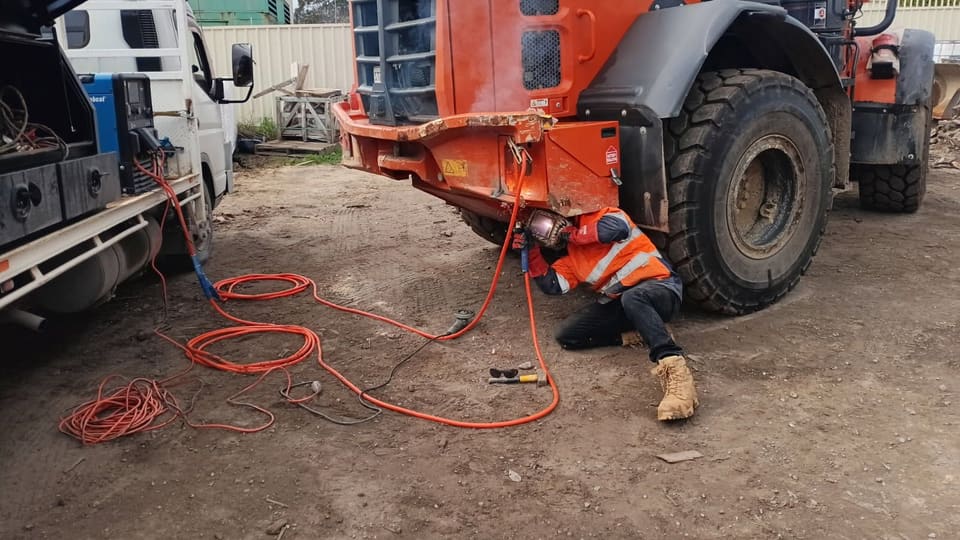
Iron Works Mobile Welding is one of the businesses whose SEO we look after. It had no website at all until April 2026, so it started with no link history.
Its pages still climbed. In Search Console, its average position for “mobile welding adelaide” went from 26.5 (13 Jun – 10 Jul) to 5.1 (1 – 30 Oct 2026). The work behind that was a page for each service, pages for the towns Sean actually works in, and a matched Business Profile. You can see the dates and the data in the Iron Works case study.
That doesn’t mean links never matter. In busier, Adelaide-wide categories, the businesses on top usually do have more genuine local links. It means a low score is not a reason to give up, and it’s rarely the first thing to fix.
How to increase domain authority the honest way
You don’t raise the score directly. You earn links from real websites, and the tools notice over time. For a local business, the useful links usually come from:
- Business listings and directories people actually use. Our list of free business listings in Australia covers the ones worth doing.
- Suppliers, manufacturers and trade associations that list approved installers or members.
- Local organisations: the chamber of commerce, sporting clubs you sponsor, community events, schools.
- Local press, when you have a genuine story such as a new service, an award or a milestone.
- Businesses you already work with, such as a builder linking to the plumber they use on every job.
Ten relevant links from businesses in your area will usually do more for local rankings than a hundred from unrelated sites.
What to ignore
- Offers to sell you a higher score. “Boost your DA to 50” services usually sell links from networks of sites built for the purpose. The number may rise in a tool. Your rankings usually don’t.
- Paid links on high-score sites. Google’s spam policies treat buying or selling links for ranking purposes as link spam.
- Comparing yourself with national sites. A Barossa café doesn’t need the link profile of a national food site to win “cafe tanunda”.
What to watch instead
Track the numbers that turn into customers: clicks and queries in Google Search Console, where you appear in the map box from the suburbs you serve, and calls and enquiries from your website. If you want to understand why Search Console and a live search don’t always agree, see Search Console says #1, so why can’t I find my business?
Earning genuine local links is part of our local SEO in Adelaide, alongside the pages and Business Profile work that usually matter more early on. Every plan shows what’s included.
Not sure whether links are what’s holding you back? The free SEO audit compares your site with the businesses ranking above you and lists the fixes in priority order.
Frequently asked questions
What is a good domain authority score?
There isn’t a universal one. Moz and Ahrefs both describe their scores as relative. A local tradie with a score in single figures can be well placed if the businesses it competes with are similar. Compare yourself with the sites that rank for your main searches in your area, not with national brands.
Does Google use domain authority?
No. Domain Authority is Moz’s score and Domain Rating is Ahrefs’. Google uses its own systems, including link analysis such as PageRank, but it doesn’t use or publish either tool’s score.
How do I check my domain authority?
Moz’s Link Explorer shows Domain Authority, and Ahrefs has a free website authority checker for Domain Rating. Expect the two numbers to differ, because each company uses its own index and formula. Pick one tool and track the same number over time.
How long does it take to increase domain authority?
Months, and it moves in steps as the tools recrawl the web. It goes up as genuine sites link to you. Chasing the number directly, especially by buying links, tends to waste money and can break Google’s spam policies.
Should I pay for links from high domain authority sites?
No. Google’s spam policies treat buying links for ranking purposes as link spam. A paid placement on a site with a high score and no connection to your business or area is worth far less than a free link from a local supplier, association or newspaper.
Evidence used in this article
- Moz, “Domain Authority: What is it and how is it calculated” (moz.com/learn/seo/domain-authority): a score from 1 to 100 developed by Moz that predicts how likely a site is to rank; not a direct ranking factor; calculated mainly from backlink data.
- Ahrefs Help Center, “What is Domain Rating (DR)?”: a 0 to 100 score for the strength of a site’s backlink profile compared with others in Ahrefs’ database; relative, so no single number counts as good.
- Google Search Central, “A guide to Google Search ranking systems”: link analysis systems, including PageRank, are part of Google’s core ranking systems.
- Google Business Profile Help, “Improve your local ranking on Google” (answer 7091): local results are based on relevance, distance and prominence; prominence draws on information from across the web, such as links, articles and directories, plus review count and score.
- Google Search Central, “Spam policies for Google web search”: buying or selling links for ranking purposes is link spam.
- Iron Works Mobile Welding: Search Console positions from the case study’s published windows.
Free SEO audit
Want this checked on your own site?
Tell us your website and the searches that matter. You’ll get honest advice and a clear recommendation within 1–2 business days, with a PDF summary of fixes in priority order.
Get my free audit →