

Key takeaways
- Monthly fee ÷ profit per job = the extra jobs a month SEO has to bring in to pay for itself. Round up.
- On our plans ($349, $599 or $1,099 a month) that works out at 1 to 4 jobs a month at $300 to $1,000 profit per job. Growth and Serious include Google Ads inside the fee.
- SEO takes months to build. Start when you can carry the fee in the meantime and you have room for more work.
- It’s not worth it yet if you’re booked out, nobody searches for what you sell, the basics aren’t set up or you can’t track enquiries.
On this page
Short answer: is SEO worth it for a small business? It is when the new work it brings in earns back the monthly fee, and you can afford to wait the months it takes to build. The sum is simple: divide the monthly fee by the profit you make on an average job. That’s how many extra jobs a month SEO needs to bring in to break even. If that number looks easy for your business and people search Google for what you sell, it’s probably worth it. If not, it may not be worth it yet.
We’d rather you work this out before you sign up with anyone, us included. Here’s the sum, what it looks like on our three plans, when we’d tell you to wait, and how to check whether it’s paying off.
The break-even sum
You need two numbers: what SEO costs you each month, and the profit you keep from an average job or sale. Not the invoice total. The profit, after materials, wages, fuel and your own time.
The break-even sum. Monthly SEO fee ÷ profit per job = extra jobs a month you need to break even. Round up, because half a job doesn’t pay a bill.
Say a job leaves you $400 profit (an example figure) and you’re on our Growth plan at $599 a month. That comes to about one and a half jobs, so you need two extra jobs a month from search to cover it.
Two adjustments make the sum more honest. First, repeat customers: if customers come back, like a fortnightly clean, a yearly service or a regular weekly order, use the profit a customer brings over a typical year, not one visit. The break-even drops a long way. Second, work you’d have won anyway: only count jobs that came through search, not regulars or word of mouth. The easiest way to know is to ask every new customer how they found you.
What the sum looks like on our plans
Our plans are month to month: Local at $349, Growth at $599 and Serious at $1,099 a month. Here’s the break-even at two levels of profit per job, rounded up to whole jobs:
- Local, $349 a month: 2 jobs a month at $300 profit per job, or 1 job at $1,000.
- Growth, $599 a month: 2 jobs at $300, or 1 job at $1,000.
- Serious, $1,099 a month: 4 jobs at $300, or 2 jobs at $1,000.
Growth and Serious include Google Ads: 20% of the fee on Growth (about $120 a month) and 35% on Serious (about $385 a month) goes into Google Ads. That money is already inside the monthly payment, not added on top, so use the full plan fee in the sum. We set up, run and manage the ads and report the results monthly. If you’d rather not run ads, you can swap that share for other work of the same value instead. Local includes no Google Ads.
The plans also differ in how much gets built: up to one page a month on Local, two on Growth and four on Serious. More pages give you more chances to show up for different services and areas. The full breakdown is on our pricing page, and our guide to what SEO costs in Adelaide puts our prices next to the wider market.
Enquiries are not jobs
The sum gives you jobs. SEO brings enquiries, and not every enquiry turns into work. If you win roughly one quote in three, multiply the break-even by three to get the enquiries you need. On Growth at $300 profit a job, that’s two jobs, so about six enquiries a month.
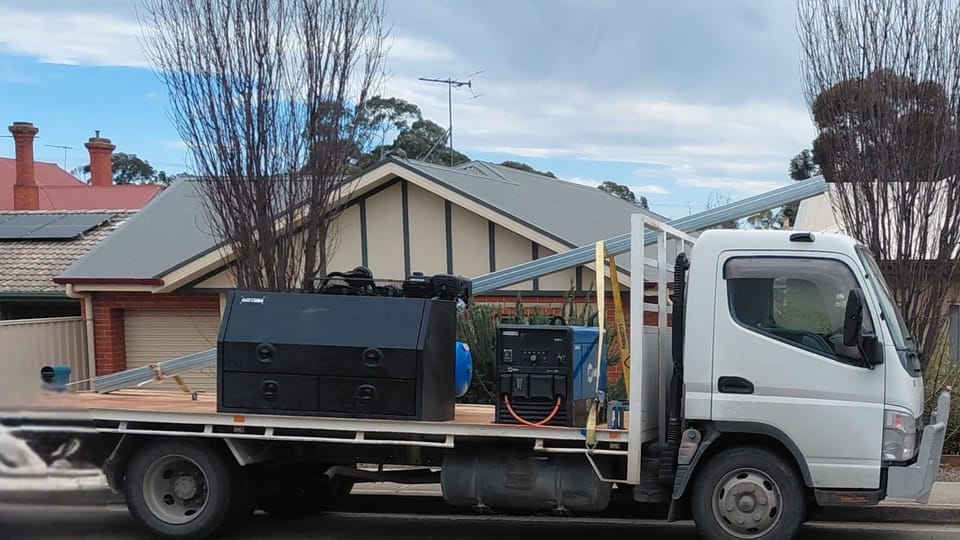
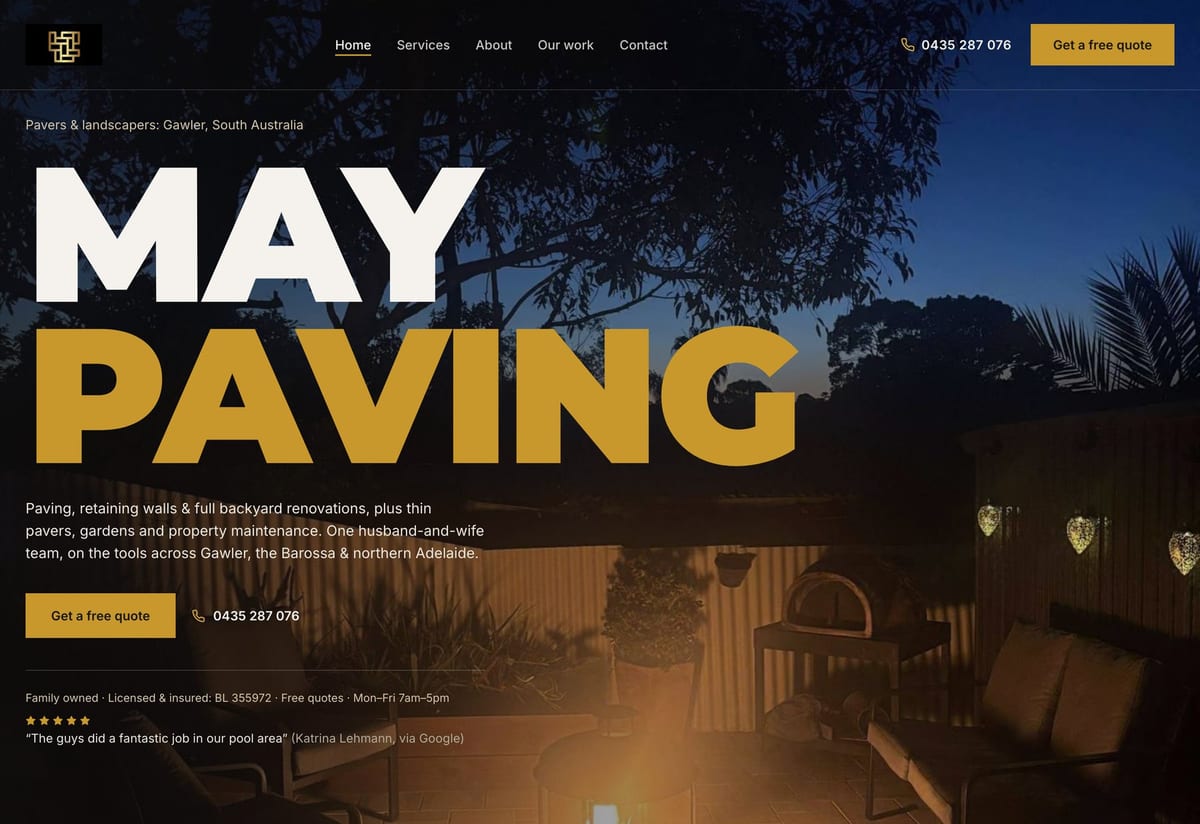
For a sense of what a month of website enquiries can look like for a local business: in September 2026, Iron Works Mobile Welding had 15 enquiries from its website (6 quote forms, 6 calls and 3 emails), and May Paving had 10 (5 forms, 4 calls and 1 email). Those counts are website forms plus calls and emails tapped from the site. They’re two of our clients, not an average, and Google search was only one of the ways people reached those sites. Your numbers will depend on your trade, your area and your competition.
Free SEO audit
Want an honest answer for your business?
A person checks your website, your Google Business Profile and the searches you should be winning, then sends a PDF summary with the fixes in priority order within 1–2 business days.
When is SEO worth it for a small business?
In our experience it tends to pay when most of these are true. Run through the list before you spend anything:
- People search Google for what you do, in the places you work.
- The break-even is a small number of jobs for your business.
- You have room for more work, or you want to replace work you’d rather not do.
- Your profit per job is decent, or customers come back.
- You can carry the fee for several months before judging it.
- Someone answers the phone and replies to enquiries quickly.
Local searches name places more often than many owners expect. When we looked at a quarter of Search Console data from 19 SA small-business websites, searches naming a suburb, town or region made up 40.4% of non-branded impressions (what SA small businesses are found for, published 6 October 2026). If your customers search like that, there’s something for SEO to win.
In our work, what wins those searches is mostly a clear page for each service and area, written for customers rather than for Google. That fits Google’s guidance on creating helpful, reliable, people-first content: its ranking systems are designed to show information made mainly to help people, not to gain rankings.
When SEO is not worth it yet
You’re booked out. If you can’t take more work, more enquiries just mean more people to turn away. Spend the money when you have capacity, or when you want to swap low-margin jobs for better ones.
The profit per job is small and customers don’t come back. If the break-even comes out at ten or twenty jobs a month, the sum is hard to win.
Nobody searches for it. Some businesses are found through referrals, tenders or a handful of trade contacts. If your customers don’t use Google to find what you sell, ranking won’t change much.
The basics aren’t done. A free Google Business Profile that was never set up, a website that breaks on a phone, or no website at all. Fix those first. Our parent business, JB Digital Barossa, builds websites, and a good build is a better first spend than a monthly plan on a weak site.
You need the money back next month. SEO builds over months. If your cash flow can’t carry the fee while it builds, wait, or look at paid ads first. Our guide to SEO or Google Ads compares the two for Adelaide businesses.
You can’t measure it. If calls and form messages aren’t counted and nobody asks how customers found you, you’ll never know whether it was worth it. Sort that out before you start.
The months in between
The hardest part of the sum is time. SEO costs money from the first month, but the work takes a while to show up in Google. Google’s SEO Starter Guide says some changes can take effect in a few hours and others several months, and that there are no secrets that automatically rank a site first. Nobody can promise you a ranking, and you should be wary of anyone who does.
So decide up front how many months you can carry the fee before you judge it, and run the sum over that whole stretch, not one month. Our guide to how long SEO takes has real SA timelines to plan around.
This is where the ads on Growth and Serious can help: paid ads can put you on the page while the organic work builds. They cost money for every click and stop when the budget stops, so treat them as a bridge, not a replacement.
Our plans run month to month, and you can cancel any time with 30 days’ notice by email. Your first report comes one month after you start, then monthly.
How to tell if it’s paying off
Once you start, judge SEO on enquiries and jobs, not rankings alone. Each month:
- Count enquiries from the website: forms, calls and emails.
- Ask new customers how they found you, and note the ones who say Google.
- Work out how many of those became paid jobs, and the profit on them.
- Check Google Search Console for clicks from searches that don’t include your business name. Those are new people finding you.
Then put those numbers back into the break-even sum. If the jobs from search cover the fee, it’s paying for itself. If they don’t after the run you allowed for, ask us why, and decide whether to change the plan or stop.
Not sure where your business sits? Send us your website for a free SEO audit. A person checks it, and you get honest advice and a clear recommendation within 1–2 business days, including whether SEO is worth it for you yet.
For how we approach Google Maps and suburb searches for trades and service businesses, see local SEO in Adelaide.
Frequently asked questions
Is SEO worth it for a small business?
It can be, when the extra work it brings in covers the monthly fee and you can wait the months it takes to build. Divide the monthly fee by your profit per job to see how many extra jobs a month you need. If that’s a small number and people search Google for what you do, it’s usually worth testing. Nobody can guarantee rankings or enquiries, so judge it on your own enquiry and job numbers.
How many jobs a month do I need for SEO to pay for itself?
Take the monthly fee, divide it by your profit per job and round up. On our Growth plan at $599 a month, that’s two jobs at $300 profit each, or one job at $1,000. Then allow for the quotes you don’t win. If you win about one in three, you need roughly three times as many enquiries as jobs.
How long does SEO take to pay for itself?
There’s no fixed answer, and anyone who gives you a date is guessing. Google says some changes can take effect in a few hours and others several months, and competitive searches usually take longer to move than quiet ones. Decide up front how many months you can carry the fee, and count enquiries from the first month so you can see the trend.
Is Google Ads better value than SEO for a small business?
They do different jobs. Ads can put you on the page quickly, but you pay for every click and they stop when the budget stops. SEO is slower to start but keeps working while your pages rank. Our Growth and Serious plans include both: 20% of the fee on Growth (about $120 a month) or 35% on Serious (about $385 a month) goes into Google Ads that we set up, run and manage, already included in the monthly payment.
What if SEO isn’t working for my business?
Our plans run month to month, and you can cancel any time with 30 days’ notice by email. Your first report comes one month after you start, then every month, so you can see what we’ve done and what’s changed. If we think SEO isn’t the right spend for your business, we’ll tell you.
Evidence used in this article
- Google Search Central, SEO Starter Guide: some changes can take effect in a few hours and others several months, and there are no secrets that automatically rank a site first in Google.
- Google Search Central, “Creating helpful, reliable, people-first content”: Google’s automated ranking systems are designed to present helpful, reliable information created primarily to benefit people, not to gain search rankings.
- Adelaide SEO Services plan prices (Local, Growth, Serious, month to month, set 5 October 2026) and the Google Ads share (none on Local, 20% of the fee on Growth, 35% on Serious, out of the fee, 23 October 2026). The break-even job counts in this post are worked from those prices.
- Website enquiries for September 2026 (form enquiries one per person per day, plus calls and emails tapped from the website): Iron Works Mobile Welding 15 (6 forms, 6 calls, 3 emails), May Paving 10 (5 forms, 4 calls, 1 email). JB Digital Barossa client results data, generated 13 October 2026.
- Adelaide SEO Services study “What SA small businesses are found for on Google” (published 6 October 2026): 19 SA small-business websites, one quarter of Search Console data; searches naming a suburb, town or region made up 40.4% of non-branded impressions.
Free SEO audit
Want this checked on your own site?
Tell us your website and the searches that matter. You’ll get honest advice and a clear recommendation within 1–2 business days, with a PDF summary of fixes in priority order.
Get my free audit →